
 https://carlsonbuilding.com/wp-content/uploads/2026/02/Big‑Box-Retailers-Maintain-Cleanliness-and-Saf_-How-Automation-Helps-High-Traffic-Retail-Store-Cleaning.jpg
1250
2000
Abstrakt Marketing
/wp-content/uploads/2024/11/CBM-Logo-Color.png
Abstrakt Marketing2026-02-03 08:33:432026-02-24 07:59:09How Retail Store Cleaning Automation Protects Cleanliness & Safety During Peak Traffic
https://carlsonbuilding.com/wp-content/uploads/2026/02/Big‑Box-Retailers-Maintain-Cleanliness-and-Saf_-How-Automation-Helps-High-Traffic-Retail-Store-Cleaning.jpg
1250
2000
Abstrakt Marketing
/wp-content/uploads/2024/11/CBM-Logo-Color.png
Abstrakt Marketing2026-02-03 08:33:432026-02-24 07:59:09How Retail Store Cleaning Automation Protects Cleanliness & Safety During Peak TrafficWhat Is Automated Retail Cleaning?
Automated retail cleaning refers to the use of smart technologies that perform or support routine cleaning tasks with minimal manual intervention. These tools are designed to operate consistently in large environments, often during open hours, while integrating with broader cleaning workflows. Rather than replacing human teams entirely, automation enhances productivity and ensures baseline cleanliness standards are always met.
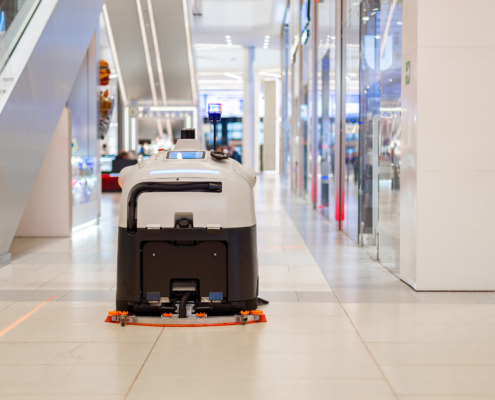
In big-box stores, automation is most commonly used for floor care, monitoring, and repetitive tasks that require consistency. Robotic equipment follows programmed routes, adjusts to obstacles, and delivers predictable results regardless of staffing variability.
For national retailers managing multiple locations, automated retail cleaning creates a standardized foundation that supports both efficiency and brand alignment.
Examples of Automation in Retail Cleaning Today
Automation in retail cleaning is already in use across many large retail environments. These technologies focus on high-impact, repeatable tasks that benefit most from consistency.
Common examples include:
- Robotic floor scrubbers programmed to clean high-traffic aisles and entryways on consistent schedules
- Autonomous sweepers that manage debris throughout operating hours without disrupting customers
- IoT-enabled dispensers and monitoring tools that track usage levels and cleaning frequency
- Smart dashboards that provide visibility into cleaning activity across multiple locations
Together, these tools reduce reliance on manual labor while improving transparency and accountability across the cleaning operation.
Why National Big-Box Retailers Are Considering Automation
The push toward automated retail cleaning is driven by several challenges that affect nearly every large retail chain. Labor shortages remain one of the most pressing issues, making it difficult to staff cleaning positions consistently across locations. Even when staffing is available, training quality and turnover can lead to inconsistent outcomes that impact store appearance and safety.
At the same time, customer expectations around cleanliness are higher than ever. Shoppers associate clean floors and well-maintained environments with professionalism and trust, especially in high-traffic stores. Automation helps ensure that retail store cleaning standards are met regardless of staffing fluctuations or time of day.
For national brands, this consistency protects reputation while easing operational strain.
The Cost Pressures Driving Smarter Retail Cleaning Strategies
Retail margins are under constant pressure from rising wages, supply costs, and competitive pricing models. Traditional cleaning models rely heavily on labor, which can be unpredictable and expensive at scale. Automated retail cleaning allows organizations to reallocate labor, focusing human effort on detailed tasks while machines handle repetitive work.
Over time, this shift leads to better cost control and more predictable budgeting. Instead of increasing headcount to meet cleaning demands, retailers can stabilize expenses by investing in technology that scales across locations. This approach reframes retail cleaning as a controllable operational lever rather than a variable expense.
How Automation Improves ROI in Retail Cleaning
The ROI of automated retail cleaning extends beyond direct labor savings. While reduced manual labor costs are significant, the long-term value comes from improved efficiency, consistency, and risk reduction. Automated systems operate on set schedules and predefined routes, ensuring high-traffic areas receive consistent attention throughout the day.
Fewer missed cleanings mean fewer customer complaints and lower safety risks. Cleaner floors reduce slip-and-fall incidents, which can have costly legal and insurance implications. When automation supports daily cleaning routines, retailers experience fewer disruptions and more predictable store conditions across all locations.
Efficiency Gains Across Multi-Location Operations
For national chains, managing cleaning across dozens or hundreds of stores presents logistical challenges. Automation simplifies this complexity by standardizing processes across locations. Instead of each store interpreting how to keep a retail store clean differently, automated systems follow the same protocols everywhere.
This uniformity makes it easier for operations and procurement leaders to evaluate performance and make informed decisions. Centralized data from automated tools allows leadership teams to identify trends, adjust schedules, and optimize resource allocation. Over time, these efficiencies help strengthen the overall retail facility management strategy.
To see how automation fits into a broader, scalable approach to keeping clean, high-performing stores, discover how Carlson’s retail cleaning services help national brands maintain consistent results.
Maintaining Brand Standards Across Locations with Automation
Brand consistency is one of the biggest challenges for national retailers. Customers expect the same experience whether they’re shopping in one city or another. Automated retail cleaning supports this expectation by delivering uniform outcomes across locations, regardless of staffing differences or store size.
By establishing baseline cleaning standards through automation, retailers ensure that every store meets minimum appearance and safety requirements. Human teams can then focus on detail work, customer-facing areas, and exceptions that require judgment. This balance strengthens brand alignment while keeping operational demands manageable.
Operational Considerations When Scaling Automation
While automation delivers clear benefits, successful implementation requires thoughtful planning. Retailers must consider store layout, traffic flow, and operating hours when deploying automated equipment. Not all stores are identical, and flexibility is essential to ensure technology complements daily operations rather than disrupts them.
Integration also requires coordination between cleaning teams and store leadership. Automated retail cleaning works best when paired with training, oversight, and performance monitoring. A strong partner helps retailers adapt automation to each location while maintaining centralized control over standards and outcomes.
The Strategic Advantage of a Tech-Enabled Cleaning Partner
Retail leaders should look for partners that understand both the technology and the realities of retail operations. The right provider integrates automated tools into a broader retail store cleaning services strategy rather than treating them as standalone solutions.
A knowledgeable partner helps evaluate which tasks should be automated, how to scale solutions across locations, and how to measure performance over time. This guidance ensures that automation supports long-term ROI rather than creating operational silos. For national chains, vendor capability is just as important as the technology itself.
What Retail Leaders Should Look for in an Automated Cleaning Vendor
Choosing the right partner is critical to maximizing ROI from automated retail cleaning. Beyond equipment, retailers should evaluate the vendor’s operational expertise and ability to scale.
Key considerations include:
- Experience supporting national or multi-location retail environments
- Ability to integrate automation with existing cleaning teams
- Performance tracking and reporting capabilities
- Flexibility to adapt solutions by store format or traffic level
- Alignment with broader retail facility management goals
These factors ensure automation enhances operations rather than adding complexity.
Automation as Part of a Future-Focused Retail Strategy
As retail continues to evolve, automation will play an increasingly important role in operational efficiency. Cleaning is one of the most immediate areas where technology can deliver measurable value without compromising customer experience. Automated retail cleaning supports safer stores, stronger brand perception, and more predictable operating costs.
For national big-box chains, the question is no longer whether automation belongs in cleaning strategies, but how to implement it effectively. When paired with experienced oversight and a scalable plan, automation becomes a competitive advantage rather than a simple cost-saving tool.
Turn Retail Cleaning Into a Strategic Advantage With Carlson
If your organization is exploring smarter, more scalable approaches to retail cleaning, Carlson Building Maintenance can help. Our team combines industry expertise, technology-forward solutions, and national-scale support to help retailers improve consistency, efficiency, and ROI. Reach out today to discuss how our retail cleaning strategies can support your stores now and into the future.
https://carlsonbuilding.com/wp-content/uploads/2026/02/Big‑Box-Retailers-Maintain-Cleanliness-and-Saf_-How-Automation-Helps-High-Traffic-Retail-Store-Cleaning.jpg
1250
2000
Abstrakt Marketing
/wp-content/uploads/2024/11/CBM-Logo-Color.png
Abstrakt Marketing2026-02-03 08:33:432026-02-24 07:59:09How Retail Store Cleaning Automation Protects Cleanliness & Safety During Peak Traffic https://carlsonbuilding.com/wp-content/uploads/2025/12/How-to-Protect-High-Traffic-Areas-in-Big-Box.jpg
1250
2000
Abstrakt Marketing
/wp-content/uploads/2024/11/CBM-Logo-Color.png
Abstrakt Marketing2025-12-23 08:58:232026-02-24 07:59:09Retail Floor Cleaning Strategies Every Big Box Store Needs
https://carlsonbuilding.com/wp-content/uploads/2025/12/How-to-Protect-High-Traffic-Areas-in-Big-Box.jpg
1250
2000
Abstrakt Marketing
/wp-content/uploads/2024/11/CBM-Logo-Color.png
Abstrakt Marketing2025-12-23 08:58:232026-02-24 07:59:09Retail Floor Cleaning Strategies Every Big Box Store Needs https://carlsonbuilding.com/wp-content/uploads/2025/05/The-Connection-Between-Retail-Cleaning-and-Your-Customers-Trust.jpg
1250
2000
Abstrakt Marketing
/wp-content/uploads/2024/11/CBM-Logo-Color.png
Abstrakt Marketing2025-05-28 08:37:482026-02-24 07:59:10The Connection Between Retail Cleaning and Your Customers’ Trust
https://carlsonbuilding.com/wp-content/uploads/2025/05/The-Connection-Between-Retail-Cleaning-and-Your-Customers-Trust.jpg
1250
2000
Abstrakt Marketing
/wp-content/uploads/2024/11/CBM-Logo-Color.png
Abstrakt Marketing2025-05-28 08:37:482026-02-24 07:59:10The Connection Between Retail Cleaning and Your Customers’ Trust https://carlsonbuilding.com/wp-content/uploads/2024/12/Store-cleaning.jpg
1250
2000
Paul Cook
/wp-content/uploads/2024/11/CBM-Logo-Color.png
Paul Cook2024-02-19 19:23:052026-02-24 07:59:12Why Prioritize Professional Store Cleaning Services?
https://carlsonbuilding.com/wp-content/uploads/2024/12/Store-cleaning.jpg
1250
2000
Paul Cook
/wp-content/uploads/2024/11/CBM-Logo-Color.png
Paul Cook2024-02-19 19:23:052026-02-24 07:59:12Why Prioritize Professional Store Cleaning Services? https://carlsonbuilding.com/wp-content/uploads/2024/12/Professional-cleaning-windos-of-retail-store.jpg
1250
2000
Paul Cook
/wp-content/uploads/2024/11/CBM-Logo-Color.png
Paul Cook2024-01-26 23:02:532026-02-24 07:59:13The ROI of Investing in a Cleaning Business for Your Retail Facility
https://carlsonbuilding.com/wp-content/uploads/2024/12/Professional-cleaning-windos-of-retail-store.jpg
1250
2000
Paul Cook
/wp-content/uploads/2024/11/CBM-Logo-Color.png
Paul Cook2024-01-26 23:02:532026-02-24 07:59:13The ROI of Investing in a Cleaning Business for Your Retail Facility https://carlsonbuilding.com/wp-content/uploads/2024/12/Retail-workers-cleaning-shop.jpg
1250
2000
Paul Cook
/wp-content/uploads/2024/11/CBM-Logo-Color.png
Paul Cook2024-01-26 16:47:372026-02-24 07:59:13How to Create a Retail Cleaning Schedule That Suits Big-Box Retail
https://carlsonbuilding.com/wp-content/uploads/2024/12/Retail-workers-cleaning-shop.jpg
1250
2000
Paul Cook
/wp-content/uploads/2024/11/CBM-Logo-Color.png
Paul Cook2024-01-26 16:47:372026-02-24 07:59:13How to Create a Retail Cleaning Schedule That Suits Big-Box Retail https://carlsonbuilding.com/wp-content/uploads/2024/12/Decluttering-Tips-for-Retail-Workers.jpg
1250
2000
Paul Cook
/wp-content/uploads/2024/11/CBM-Logo-Color.png
Paul Cook2023-05-25 09:00:172026-02-24 07:59:13Decluttering Tips for Retail Workers
https://carlsonbuilding.com/wp-content/uploads/2024/12/Decluttering-Tips-for-Retail-Workers.jpg
1250
2000
Paul Cook
/wp-content/uploads/2024/11/CBM-Logo-Color.png
Paul Cook2023-05-25 09:00:172026-02-24 07:59:13Decluttering Tips for Retail Workers https://carlsonbuilding.com/wp-content/uploads/2024/12/clothes-store_.jpg
1250
2000
Paul Cook
/wp-content/uploads/2024/11/CBM-Logo-Color.png
Paul Cook2023-04-13 09:00:322026-02-24 07:59:14Common Challenges of Retail Store Cleaning and How to Solve Them
https://carlsonbuilding.com/wp-content/uploads/2024/12/clothes-store_.jpg
1250
2000
Paul Cook
/wp-content/uploads/2024/11/CBM-Logo-Color.png
Paul Cook2023-04-13 09:00:322026-02-24 07:59:14Common Challenges of Retail Store Cleaning and How to Solve Them https://carlsonbuilding.com/wp-content/uploads/2024/12/Image-of-a-worker-buffing-tile-floors-in-a-retail-store.jpg
1250
2000
Paul Cook
/wp-content/uploads/2024/11/CBM-Logo-Color.png
Paul Cook2023-02-16 09:00:242026-02-24 07:59:14Important Commercial Cleaning Services for Retail Businesses
https://carlsonbuilding.com/wp-content/uploads/2024/12/Image-of-a-worker-buffing-tile-floors-in-a-retail-store.jpg
1250
2000
Paul Cook
/wp-content/uploads/2024/11/CBM-Logo-Color.png
Paul Cook2023-02-16 09:00:242026-02-24 07:59:14Important Commercial Cleaning Services for Retail Businesses